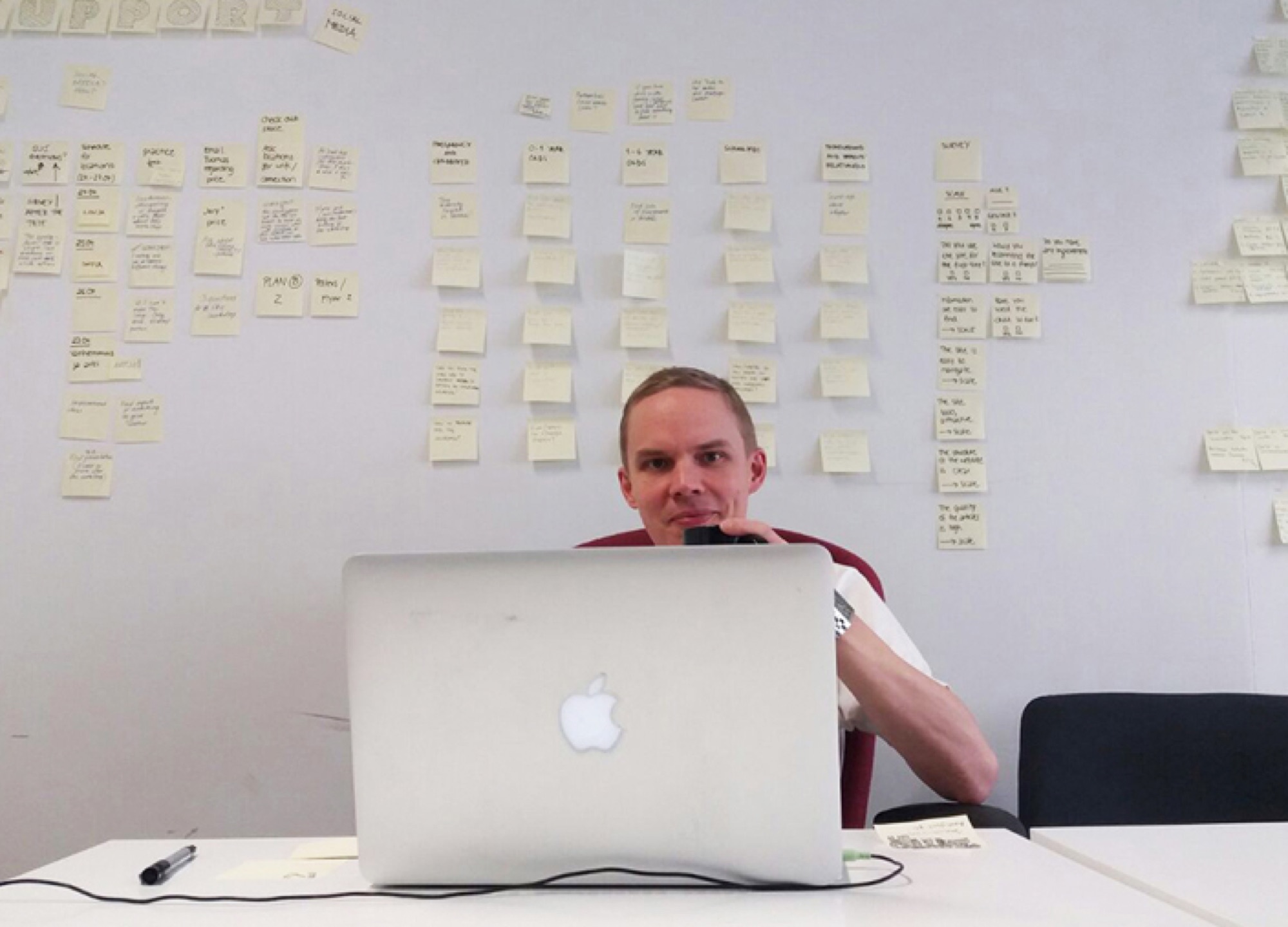
Lilinkotisäätiö Designing and creating a concept of a mobile game for mental health recovery process
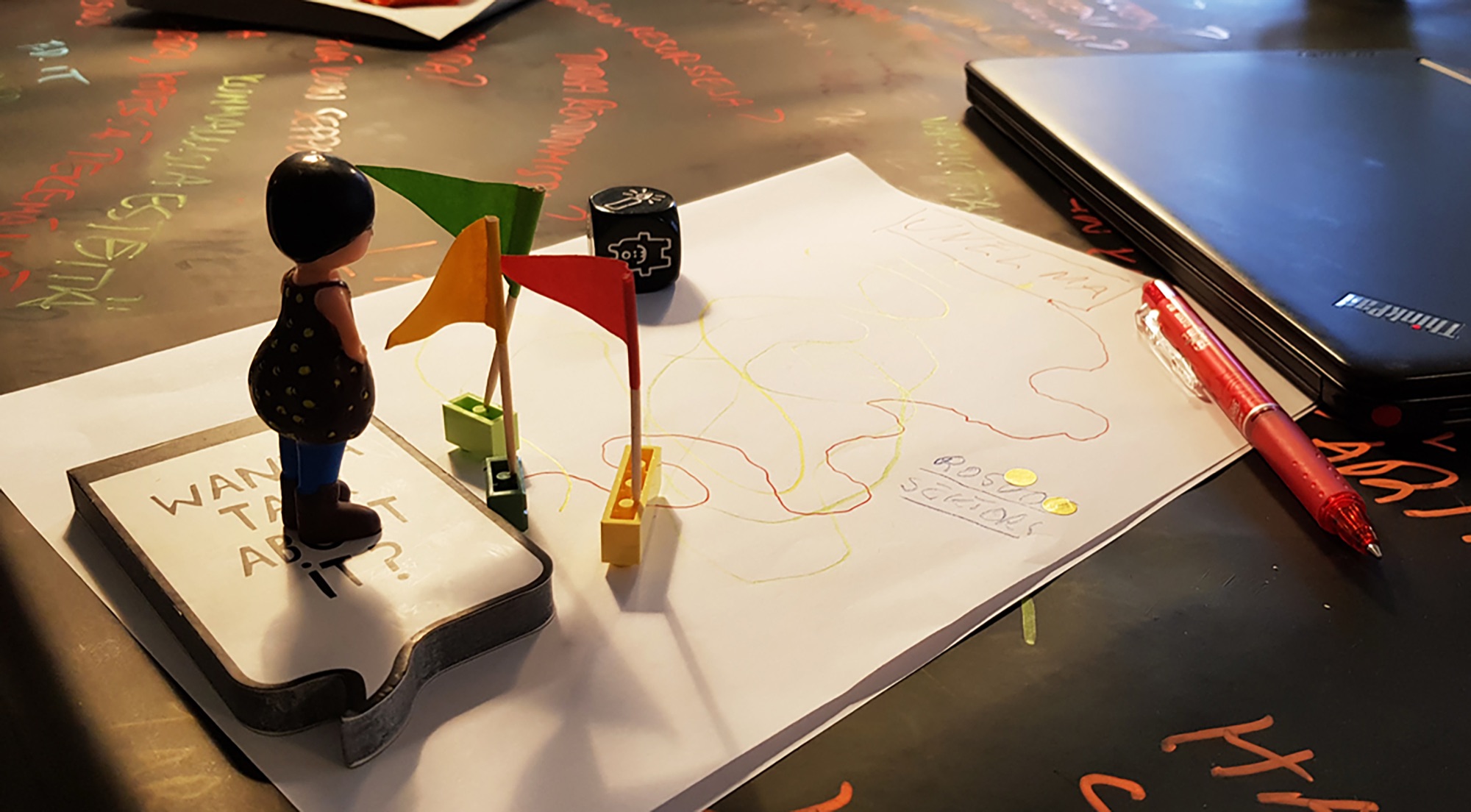
Summary
A mobile game concept for mental health recovery
The World of Recovery is a mobile game concept designed to assist individuals recovering from schizophrenia in completing daily tasks and connecting with their surroundings. The project involved creating a concept manual for funding purposes, requiring careful consideration of the cognitive limitations of the target audience.
Through collaborative Design Sprints, user testing, and detailed research, we developed game mechanics focused on simplicity and accessibility. Features included personalized tasks, in-game assistance, and clear text-based navigation.
The concept manual became a comprehensive tool for funding applications, reflecting thoughtful design and usability. The project not only met its objectives but also deepened my expertise in UX design and gamification for mental health solutions.
Challenge
Designing for cognitive accessibility
Lilinkotisäätiö, an organization supporting mental health recovery, needed a mobile game concept to help individuals recovering from schizophrenia. The game aimed to encourage users to complete daily tasks, build connections, and gain independence.
Key challenges included:
- Designing for a target audience with limited smartphone experience and no gaming familiarity.
- Accommodating cognitive limitations caused by schizophrenia, such as difficulty understanding abstract symbols.
- Creating a concept manual that could effectively communicate the game's purpose and mechanics to secure funding for future development.
Approach
A five-day Design Sprint
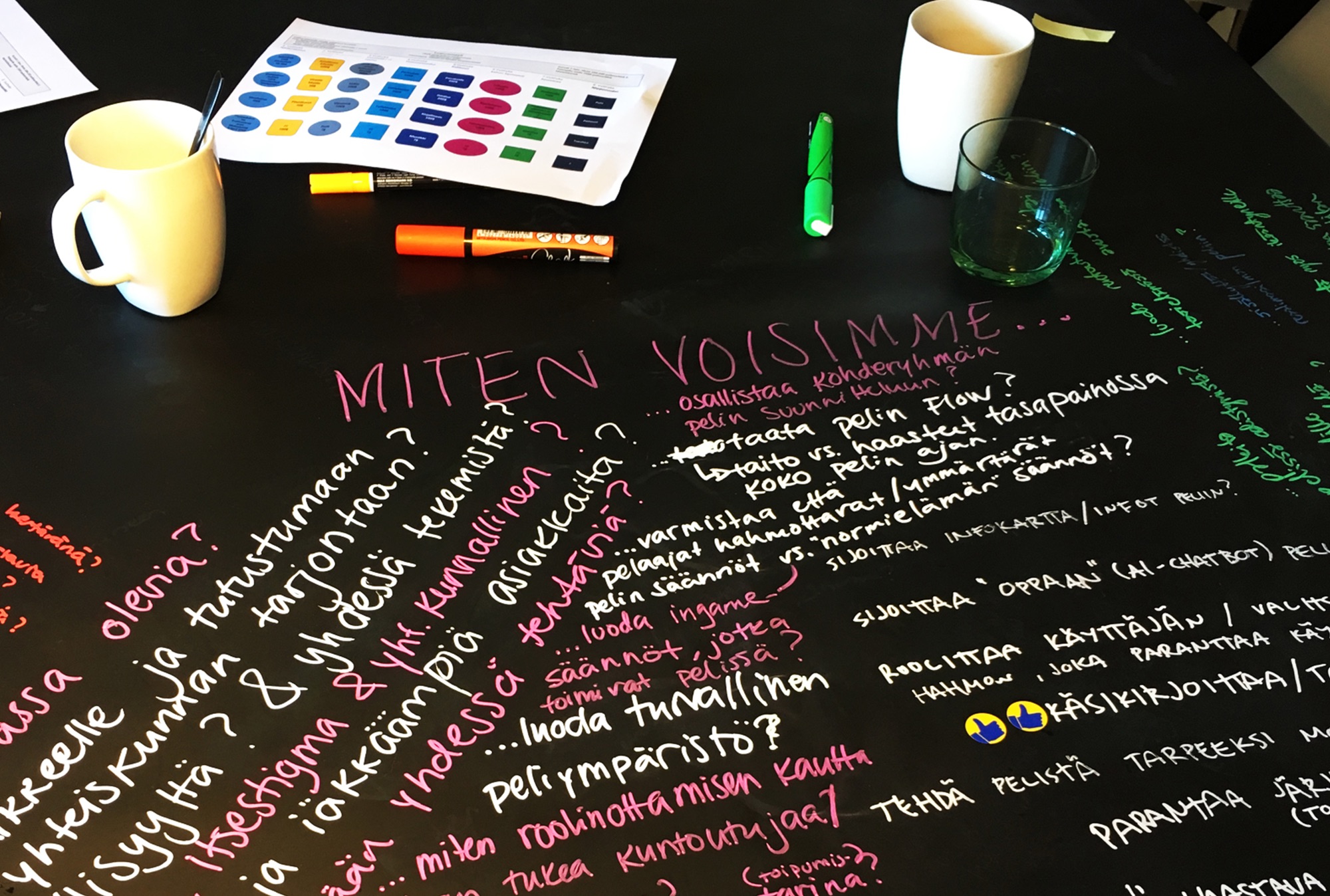
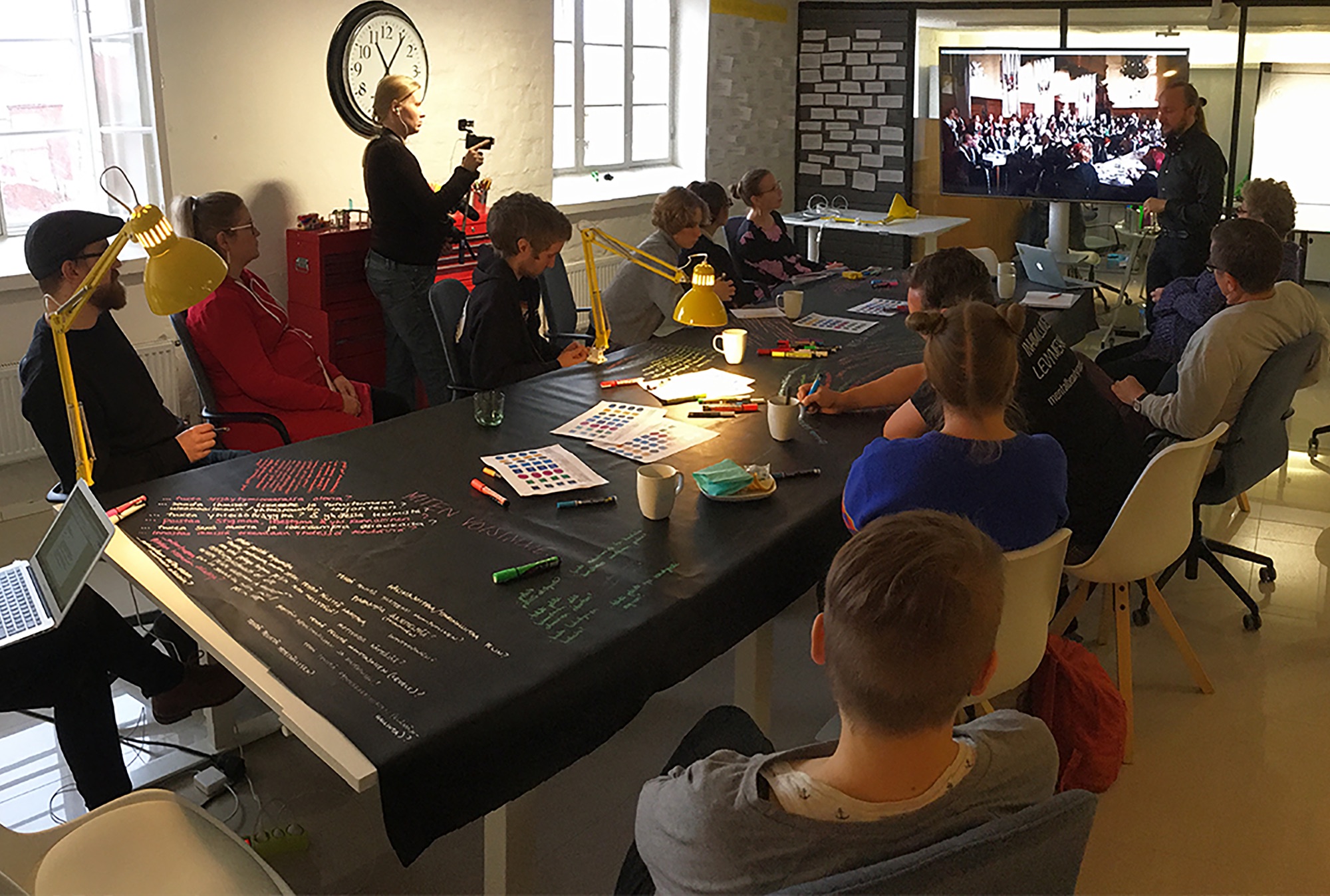
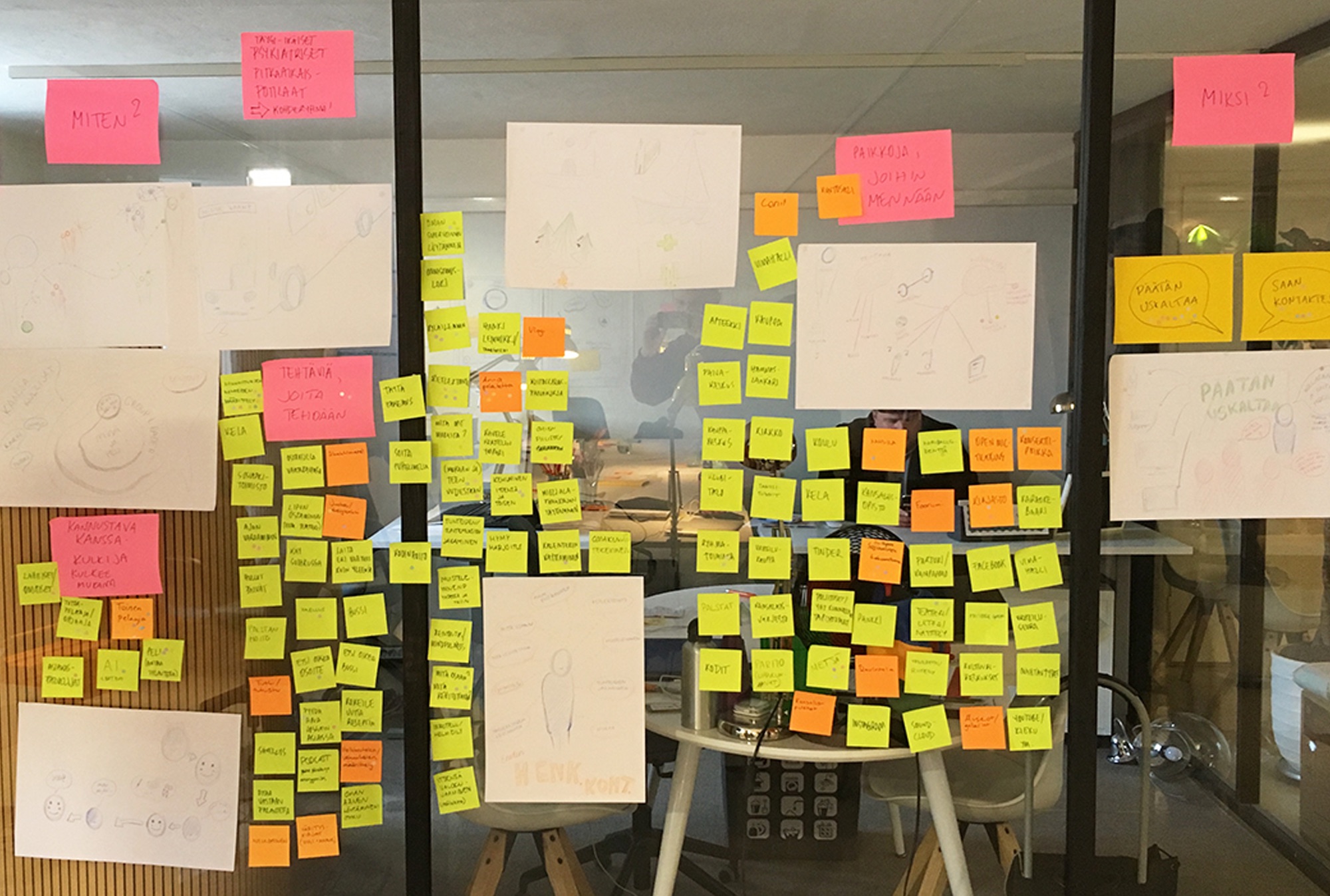
The cornerstone of this project was a five-day Design Sprint, which brought together gaming industry professionals, mental health experts, Lilinkotisäätiö personnel, and potential end users. The sprint was structured to rapidly ideate, prototype, and test solutions.
The design sprint structure was as follows:
- Understanding and defining — The first day focused on understanding the challenges faced by recoverees and defining the game's purpose—activating users and building connections with the outside world.
- Ideation — On the second day, participants brainstormed ideas, drawing on insights from schizophrenia research and gamification methods.
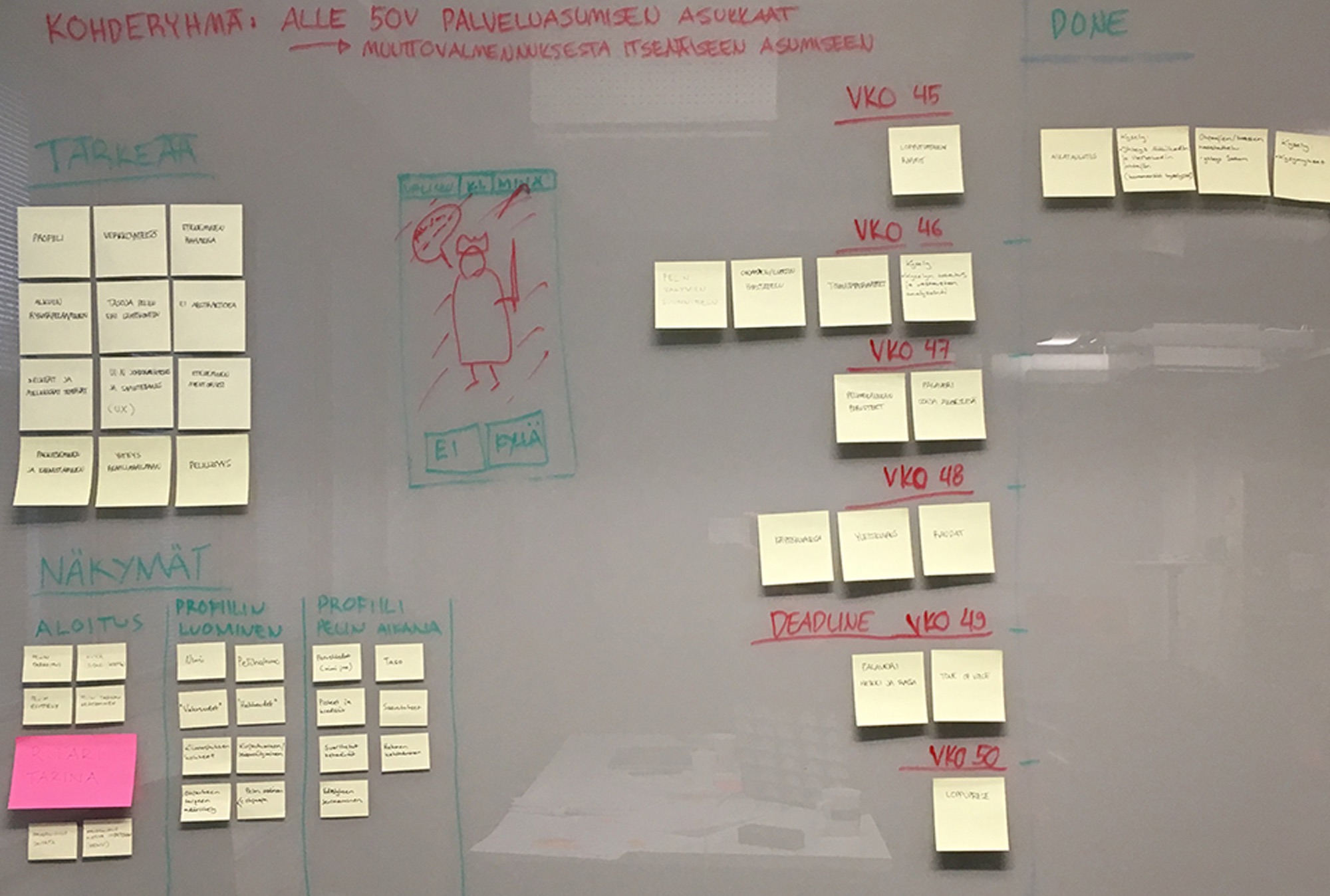
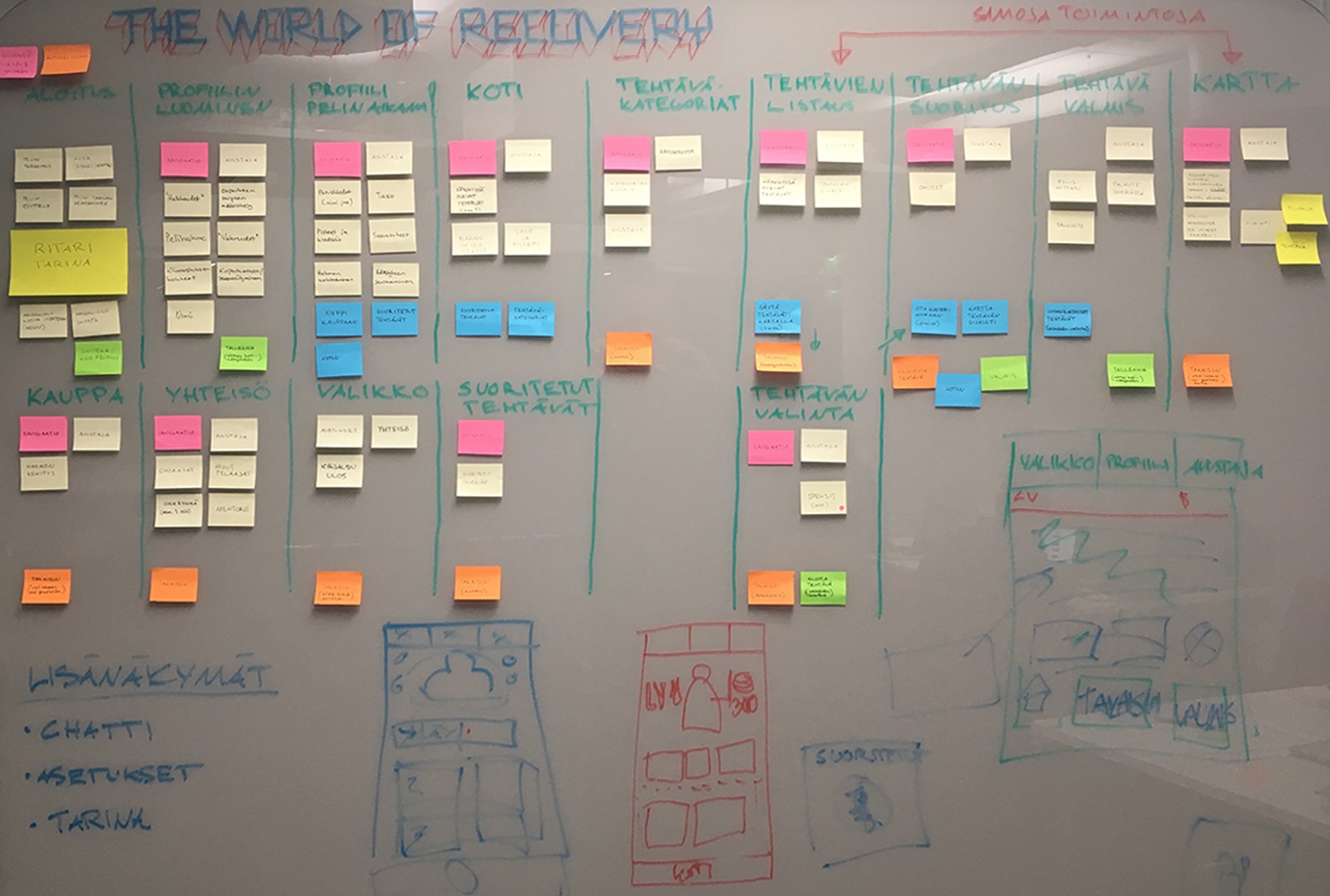
- Decision making — Day three involved prioritizing the best ideas and defining game mechanics, such as personalized tasks and a reward system.
- Prototyping — On the fourth day, our team led the creation of a paper prototype, ensuring that game mechanics were as intuitive as possible for the target audience.
- Testing and feedback — The final day involved testing the prototype with potential users, gathering feedback on usability and engagement.
Following the sprint, we analyzed the results and refined the concept further. Key adjustments included:
- Simplifying game mechanics for users with minimal mobile experience.
- Incorporating an in-game assistant to guide players.
- Using text-based instructions instead of symbols to account for reduced abstract thinking.
We also conducted interviews with Lilinkotisäätiö personnel and surveyed recoverees to validate assumptions and refine the user-centered design.
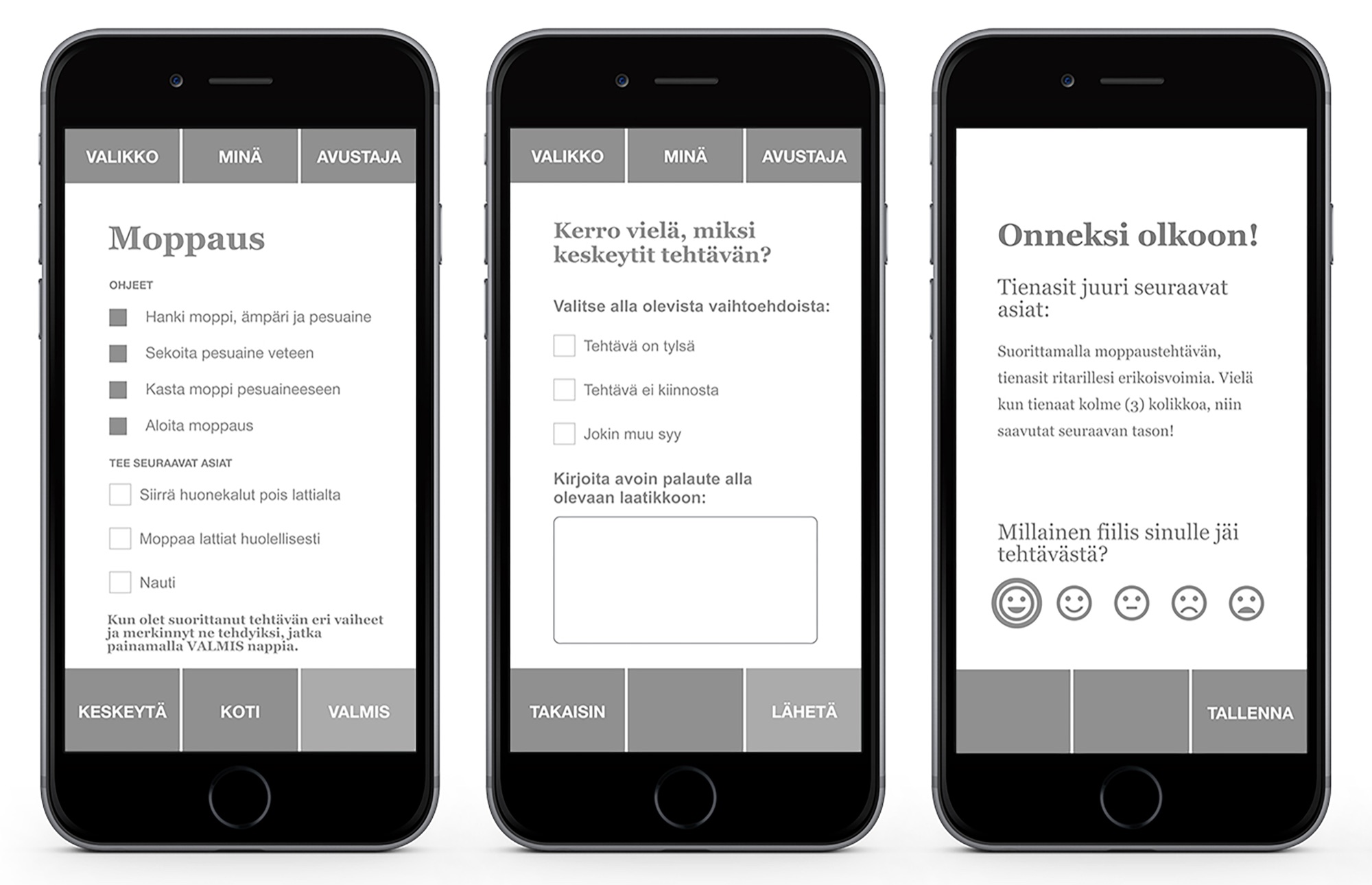
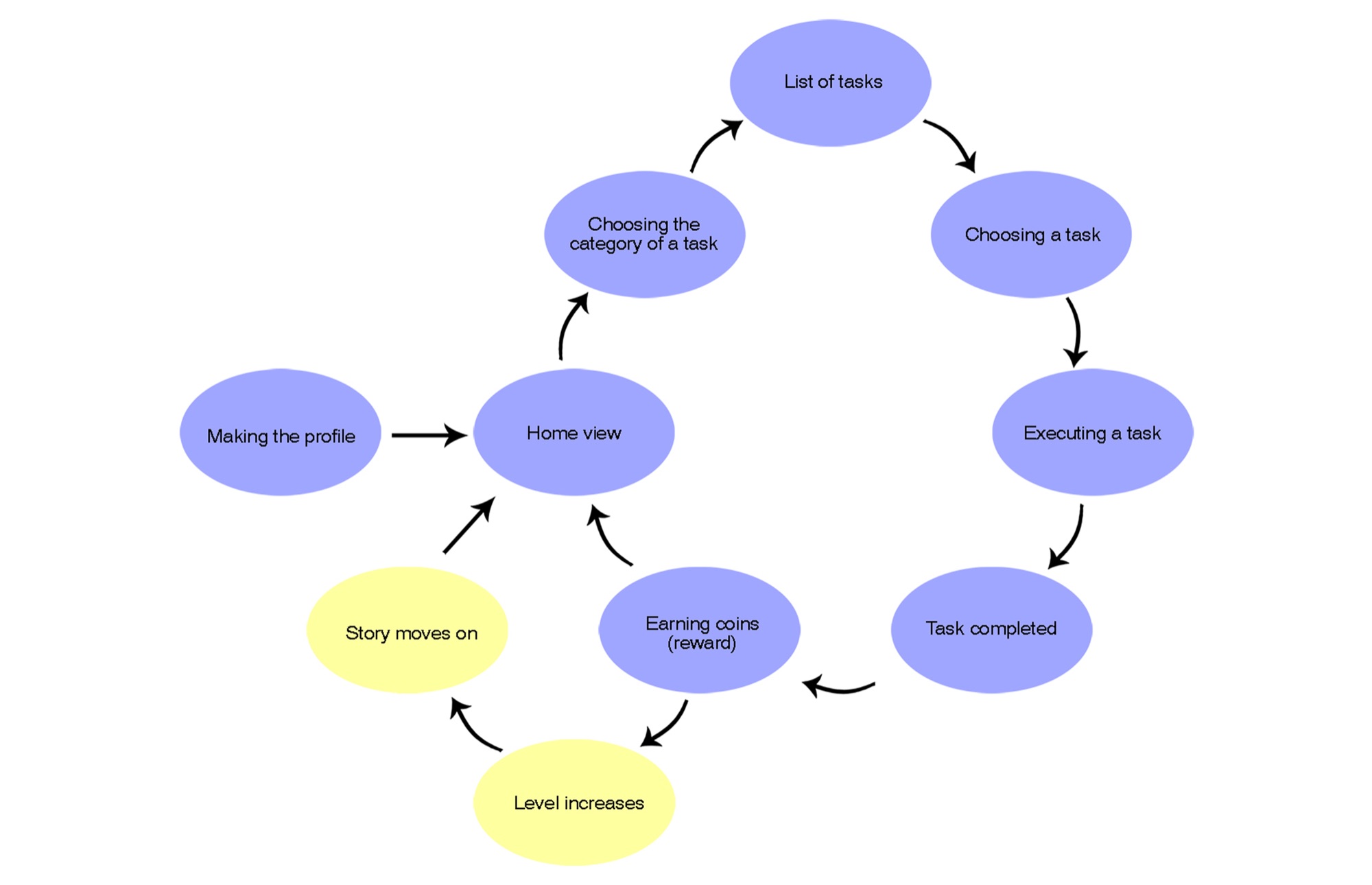
Game Mechanics
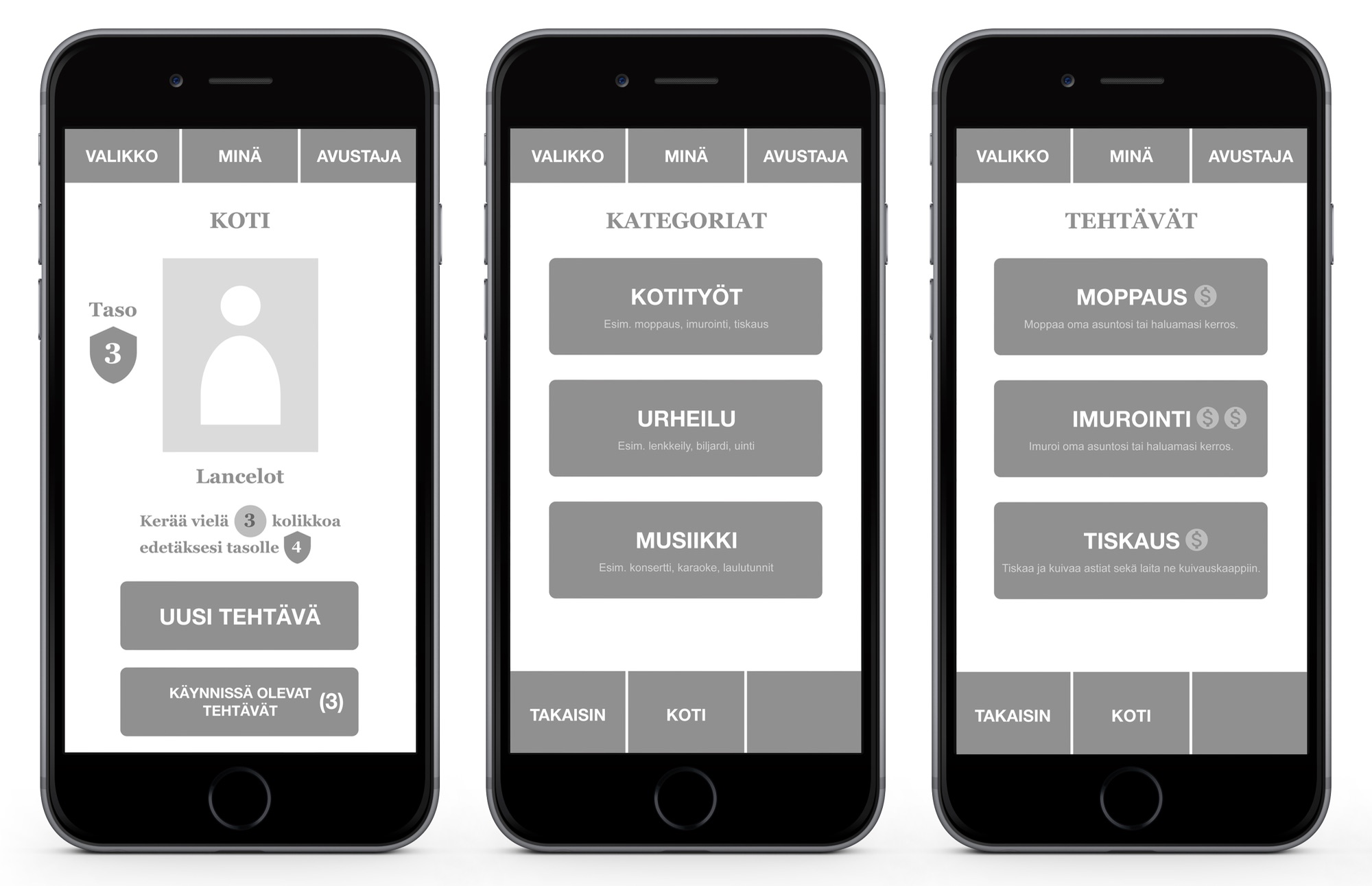
The prototype captures the core game progression — demonstrating how players advance through the recovery journey by completing real-life tasks.
Outcome
A concept manual that secured funding
The outputs included a detailed concept manual outlining game mechanics, accessibility features, and future development ideas, alongside a prototype of the mechanics created in Adobe XD. These deliverables equipped the client with the tools needed to seek funding for full development.
The resulting game concept emphasized simplicity and accessibility. Key features included:
- An in-game assistant for guidance, complemented by initial instructions from staff.
- Personalizable tasks to engage users, designed by Lilinkotisäätiö personnel.
- Clear textual descriptions replacing symbols, large readable fonts, and high-contrast colors for visual accessibility.
- Rewards integrated into the game's storyline to motivate continued play.
Despite the challenges, this project offered invaluable learning experiences. Leading prototyping and contributing to the concept manual allowed me to grow as both a UX designer and project manager. The collaborative environment of the Design Sprint fostered creative problem-solving, underscoring the power of open communication in achieving impactful outcomes.
Visit live website"The project was executed excellently and the final product (concept manual and the prototype) included everything we wanted. The biggest achievement of this project was the actual testing of the prototype. The designers managed to create a model of the game and test it, which made a huge difference why The World of Recovery got funded by STEA."